
Affordable senior care: Key takeaways
- In-home senior care in Florida typically ranges from $25 to $40 per hour, but costs vary based on care needs, schedule, and location
- Many families start with just a few hours of support each week; care is more flexible and affordable than they expected
- Companion care, personal care assistance, dementia support, and respite care can all be tailored to fit a family’s needs and budget
- Private pay, VA benefits, and long-term care insurance may help cover some care expenses, depending on eligibility and coverage
- The value of in-home care goes beyond cost. It helps older adults remain safe, comfortable, and independent at home, with dignity, while giving families greater peace of mind
For many Florida families, the search for in-home care begins with a single moment.
Maybe your dad had a recent fall. Maybe your mom is finding everyday tasks harder than they used to be. Or maybe you’ve quietly reached the point where juggling work, family, and caring for someone you love no longer feels sustainable, and you know it’s time to ask for a little help.
Whatever brought you here, one question is unavoidable:
How much does in-home senior care actually cost?
The honest answer is that it depends. What your loved one needs, how often a caregiver visits, and whether benefits like VA programs or long-term care insurance apply all shape the cost.
In this guide, we’ll walk you through what senior home care typically costs in Florida, what shapes the price, and how families can make care more affordable, all while helping someone they love stay safe, comfortable, and independent in the home they know best.
What in-home senior care typically costs in Florida
In Florida, non-medical in-home senior care typically costs between $25 and $40 per hour, depending on factors such as location, scheduling needs, and the type of support a person requires.
Rates can differ from one community to the next, so families in Tallahassee, Gainesville, Jacksonville, and Tampa may see slightly different pricing based on local caregiver availability and demand.
While that range provides a helpful starting point, most families quickly discover that there isn’t a one-size-fits-all answer. Some loved ones may only need a few hours of companionship each week, while others benefit from daily assistance with personal care, meal preparation, transportation, or memory-related support.
What families usually start with
Many families begin with a modest amount of support and adjust care as needs change over time.
For example, some families schedule a few visits each week for companionship, transportation, or help around the house. Others arrange daily visits to assist with personal care tasks such as bathing, dressing, meal preparation, and mobility support.
Common starting points include:
- A few hours of companionship each week
- Transportation to appointments and errands
- Meal preparation and light household assistance
- Help with daily activities such as bathing and dressing
- Regular check-ins that provide both safety and social connection
Starting with a smaller care schedule often allows families to address immediate concerns while maintaining flexibility for the future.
What that might look like month-to-month
Every family’s situation is different. Some people need occasional companionship and help with errands, while others benefit from daily personal care or memory support. That’s why the best way to understand costs is through a personalized care assessment that considers your loved one’s needs, schedule, and goals.
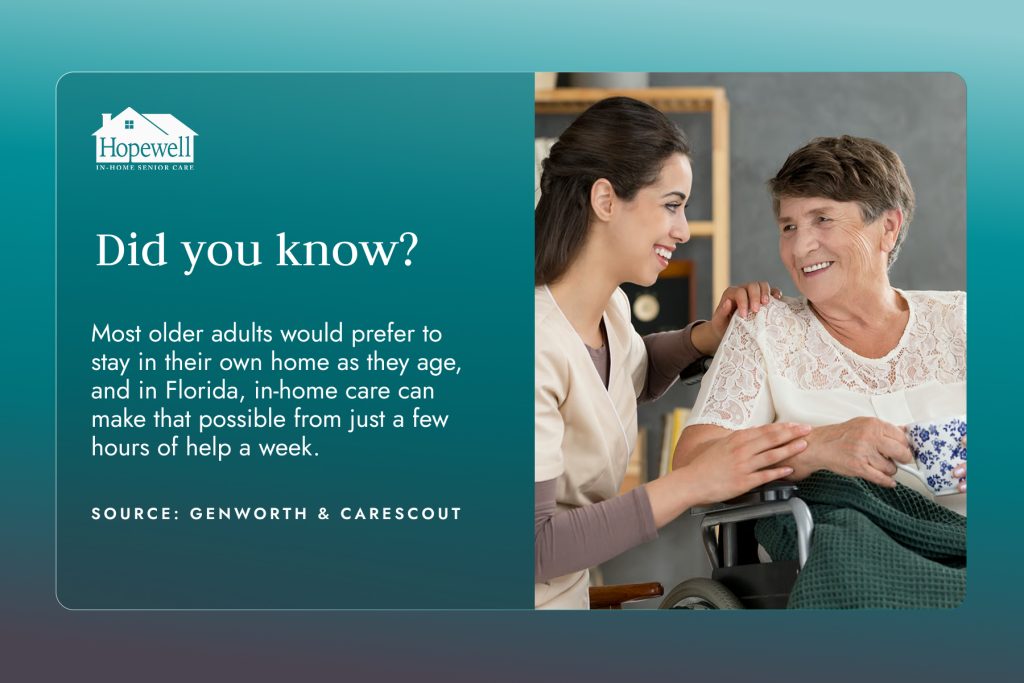
In-home care in Florida is billed by the hour, so families pay only for the support they truly need
What drives the cost of in-home care up or down?
Every family’s situation is different, which means the cost of care can vary as well. The biggest factors are usually how much support is needed, what kind of assistance is required, and how often a caregiver visits.
The amount of care needed
Someone who needs a few hours of companionship each week will have different needs than someone who requires daily support with personal care and household tasks. In general, more care hours result in higher overall costs.
The type of support required
Care plans are tailored to each person’s needs. Services may include:
- Companion care and social interaction
- Meal preparation and light housekeeping
- Transportation to appointments and errands
- Assistance with bathing, dressing, and grooming
- Post-hospital care during recovery from surgery or a hospital stay
- Dementia support
- Respite care for family caregivers
The right care plan focuses on providing meaningful support without paying for services that aren’t needed.
Your location and schedule
Care costs can vary across Florida based on local demand and caregiver availability. Scheduling can also play a role, especially when families need care to begin quickly after a hospitalization, fall, or other unexpected life change.
At Hopewell, we understand that these situations can feel overwhelming. We start as soon as possible because we understand time is of the essence.
It’s about more than cost
When comparing care options, it’s important to look beyond the hourly rate. Who comes into your loved one’s home matters just as much as the cost. At Hopewell, care is provided by licensed and insured caregivers who are carefully trained, with RN oversight where applicable, so families can feel confident about the person at their loved one’s side.
The right support helps a loved one remain safe, comfortable, and independent at home, with dignity, while giving family members peace of mind and the assurance that they’re not carrying the responsibility alone.
Start your care plan with Hopewell todayHome care vs. assisted living: The comparison many families make
When families begin researching care options, they’re often comparing more than costs. They’re trying to determine what will provide the right balance of support, safety, and independence for their loved one.
While assisted living may be the right choice in some situations, many older adults prefer to remain in the comfort of their own homes for as long as possible. In-home care makes that possible by providing personalized support while allowing seniors to maintain familiar routines and stay connected to the people and places they love.
Some of the benefits families often consider include:
Remaining in a familiar home environment
- Maintaining independence and daily routines
- Receiving one-on-one support tailored to individual needs
- Staying closely involved in care decisions
- Adjusting care hours as needs change over time
When in-home care may be more cost-effective
For seniors who need occasional or moderate assistance, in-home care can often be a more flexible and affordable option than moving into a residential facility. Rather than paying for services they may not need, families can build a care plan around their loved one’s specific needs and schedule.
The right choice depends on each family’s circumstances, but for many, in-home care provides the support they need while helping a loved one continue living safely and comfortably at home.
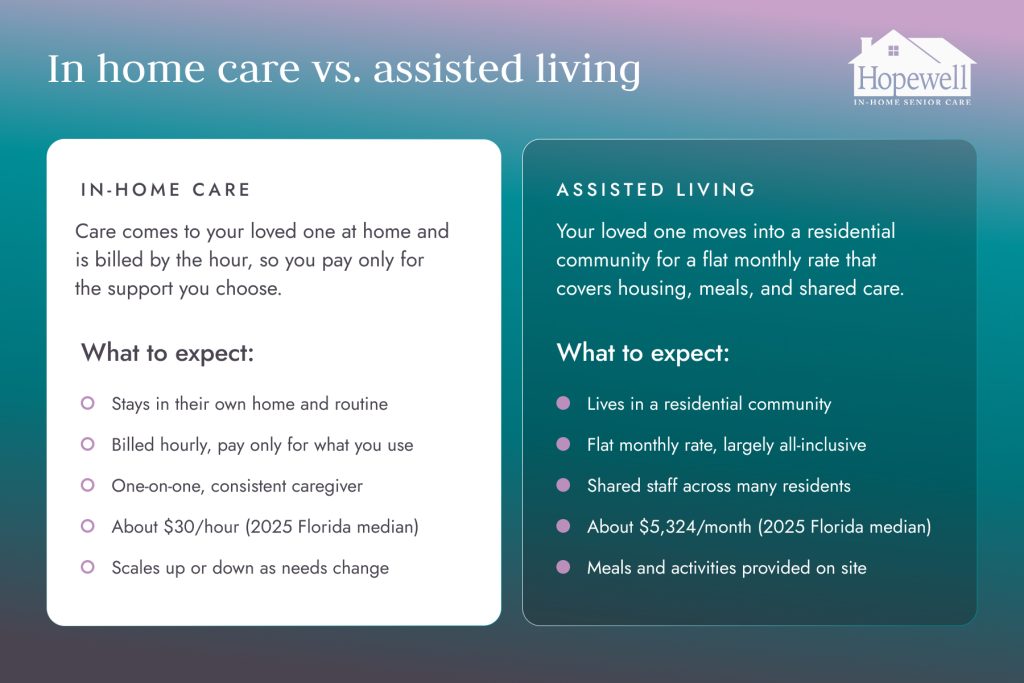
Both can be good options. The right choice often comes down to how much support your loved one needs
Affordable senior home care options and ways to pay
One of the biggest misconceptions about in-home care is that it requires full-time support from day one. In reality, many families start with a few hours of assistance each week and adjust care as their loved one’s needs change.
Because care plans are flexible, families can often find a level of support that fits both their needs and their budget.
Finding the right level of support
The cost of care depends largely on how much assistance is needed and how often a caregiver visits.
For example, a loved one who needs companionship, transportation, or help with meal preparation may only require a few hours of care each week. Others may benefit from daily support with personal care activities such as bathing, dressing, and mobility assistance
Common care options include:
- Companion care for social interaction, safety check-ins, and everyday support
- Personal care assistance with activities such as bathing, dressing, and grooming
- Dementia support tailored to changing cognitive needs
- Respite care options for family caregivers who need time to rest, travel, or manage other responsibilities.
Many families discover that starting with a smaller care schedule allows them to address immediate concerns without committing to more support than they currently need.
Ways families pay for in-home care
Most non-medical home care is paid for privately, but there may be additional resources available depending on your circumstances.
Private pay
Private pay is the most common payment method for in-home care. Families typically pay based on the number of care hours scheduled each week.
According to recent industry data, non-medical in-home care in Florida generally ranges from about $25 to $40 per hour, with statewide median costs reaching roughly $6,100 per month for 44 hours of care per week. Actual costs vary depending on care needs, location, and scheduling requirements.
VA benefits
Veterans and surviving spouses may qualify for programs, such as the VA Home Health Aide Program, that help offset the cost of in-home care.
Eligibility for VA-covered care depends on VA approval and clinical need, and requirements vary from family to family. It’s worth exploring available VA home care benefits and speaking with a qualified advisor to determine what programs may be available to you.
Long-term care insurance
Some long-term care insurance policies help cover non-medical in-home care services. Coverage varies by provider and policy, so families should verify:
- Which services are covered
- Waiting periods or elimination periods
- Daily or monthly benefit limits
- Documentation requirements for reimbursement
Other potential resources
Depending on eligibility, some families also explore:
- State and local senior assistance programs
- Community-based support services
- Nonprofit and veteran organizations
- Employer caregiving benefits
Availability varies by location and program, so it’s important to confirm eligibility requirements before making financial decisions.
Finding the right support starts with a Hopewell conversation
Deciding when to bring in extra support for a loved one is rarely easy. Along with questions about care, many families find themselves worrying about costs, timing, and whether they’re making the right decision.
The good news is that in-home care is often more flexible than people expect. Whether your loved one needs a few hours of companionship each week, daily assistance with personal care, or specialized support for memory-related challenges, there are options available to fit a wide range of needs and budgets.
Most importantly, the conversation isn’t just about cost. It’s about helping someone you care about remain safe, comfortable, and independent while ensuring your family has the support it needs, too.
At Hopewell, we understand that every family’s situation is unique. That’s why we take the time to listen, answer questions, and create personalized care plans that reflect your loved one’s needs, preferences, and goals.
If you’re exploring care options and wondering what support might look like for your family, we’re here to help you take the next step with confidence. Get started with in-home care by speaking with a member of our team today.
See how Hopewell can support your familyAffordable senior care: FAQs
How much does senior home care cost per hour in Florida?
The cost of senior home care in Florida typically ranges from $25 to $40 per hour, depending on factors such as location, the type of assistance needed, and the number of care hours required. Many families start with just a few hours of support each week and adjust care as their loved one’s needs change.
Is in-home care more affordable than assisted living?
It can be. For seniors who only need occasional or moderate assistance, in-home care may be a more cost-effective option because families only pay for the support they need. In addition to cost, many families value the ability to keep a loved one in familiar surroundings while maintaining their independence.
Does Medicare pay for non-medical in-home senior care?
In most cases, Medicare does not cover ongoing non-medical home care services such as companionship, meal preparation, transportation, or personal care assistance. Families often use private pay, long-term care insurance, VA benefits, or other resources to help cover these costs.
Can VA benefits help pay for in-home care?
Yes. Eligible veterans and surviving spouses may qualify for programs that help cover the cost of in-home care services. Because eligibility requirements vary, it’s important to explore available VA home care benefits and speak with a qualified advisor about your options.
How quickly can in-home care begin?
The timeline varies depending on care needs and caregiver availability. In many situations, care can begin within a matter of days. We understand that time is of the essence when families need help after a hospitalization, health change, or other unexpected life event.
This article is for educational purposes and is not medical advice. Coverage, services, and care plans vary by individual need and location. Eligibility for VA-covered services depends on VA approval and clinical need.
learn more about hopewell services