Non-medical home care: Key takeaways
- Non-medical home care helps older adults remain safe, comfortable, and independent at home
- Services may include companionship, personal care, meal preparation, transportation, and other everyday support
- Unlike medical home care, non-medical care does not include skilled nursing or clinical treatments
- Home care can ease the responsibilities of family caregivers while helping loved ones maintain their routines and quality of life
- Support can be personalized to fit your family’s needs, whether that’s a few hours each week or more regular assistance
There comes a point when many families begin wondering whether a loved one could use a little extra help at home.
Maybe everyday tasks are becoming more challenging. Maybe you’re worried about a parent living alone. Or perhaps you’re trying to balance caregiving responsibilities with work and family life.
As you explore your options, you’ll likely come across the term non-medical home care.
While it may sound complicated, the concept is actually simple. Non-medical home care provides everyday support that helps older adults remain safe, comfortable, and independent at home, while giving families greater peace of mind.
In this guide, we’ll explain what non-medical home care is, what services it includes, and how to determine whether it’s the right fit for your loved one.
Talk to the Hopewell care team todayThe everyday support that helps seniors stay at home
Non-medical home care provides practical, day-to-day support for older adults who want to continue living in the comfort of their own homes.
Unlike medical care, which focuses on treating health conditions, non-medical home care focuses on helping with everyday activities that can become more challenging with age.
This may include companionship, personal care such as bathing, dressing and grooming, meal preparation, transportation, light housekeeping, and other forms of assistance that help make daily life safer and more manageable.
The goal is independence
For many older adults, home represents familiarity, comfort, and a sense of control.
Non-medical home care helps preserve that independence by providing support where it’s needed while encouraging people to stay active and engaged in their daily routines.
Why more Florida families are choosing care at home
Many families prefer care at home because it allows loved ones to remain in familiar surroundings, maintain established routines, and stay connected to family, friends, and their community.
As Florida’s senior population continues to grow, families across Tallahassee, Gainesville, Jacksonville, and Tampa are turning to in-home care as a flexible way to provide support while helping loved ones age in place with dignity and confidence.
And because the right caregiver makes all the difference, Hopewell’s caregivers are licensed, insured, and carefully trained, with RN oversight where applicable, so families can feel confident about who is coming into their loved one’s home.
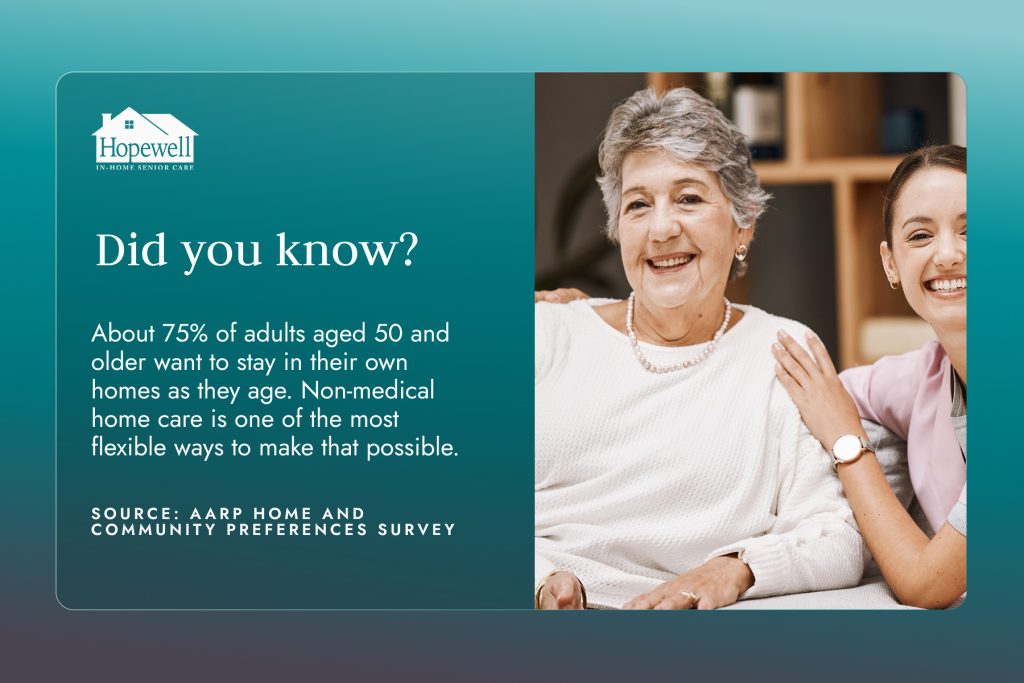
Most older adults want to stay home as they age. Non-medical home care helps make that possible
What kind of help can seniors receive at home?
Every family is different. That means the support they need is different too. Non-medical home care is designed to make everyday life easier by helping older adults with routine tasks that may become more challenging over time.
Rather than focusing on medical treatment, this type of care provides practical, day-to-day support that helps seniors remain safe, comfortable, and independent in their own homes.
Companion care
Sometimes, the most valuable support is simply having someone there.
Companion care helps reduce loneliness and provides meaningful social interaction through conversation, shared activities, walks, meal companionship, and accompaniment to appointments or community events. It also offers families peace of mind knowing someone is regularly checking in on their loved one.
Learn more about our companion care services.
Personal care services
As everyday tasks become more difficult, seniors may need assistance with activities that are essential to their comfort and well-being.
Personal care services can include support with:
- Bathing and grooming
- Dressing
- Mobility assistance
- Toileting and personal hygiene
- Transferring safely around the home
The goal is always to provide support while helping individuals maintain as much independence as possible.
Learn more about our personal care services.
Household and daily living support
Keeping up with daily responsibilities can become challenging for many older adults. Caregivers can assist with tasks that help keep the home safe, organized, and comfortable.
This may include:
- Meal planning and preparation
- Light housekeeping
- Laundry and linen changes
- Grocery shopping
- Running errands
These services help seniors continue enjoying life at home without feeling overwhelmed by daily chores.
Transportation and errands
Many seniors eventually reduce or stop driving, which can make it harder to stay connected and independent.
Non-medical home care can provide transportation to:
- Medical appointments
- Grocery stores and pharmacies
- Social activities
- Religious services
- Family gatherings
Reliable transportation helps seniors remain engaged in their communities and maintain important routines.
Respite care for family caregivers
Caring for a loved one is meaningful work, but it’s also a lot to carry. Respite care gives family caregivers a chance to rest, travel, or simply catch their breath, while a trusted caregiver steps in. Asking for that support isn’t a sign of failing your loved one. It’s part of caring for them well, and for yourself, too.
Start your care plan with Hopewell todayHome care vs. home health care: Which type of support do you need?
Many families are surprised to learn that home care and home health care are not the same thing.
While the names sound similar, they serve different purposes. Understanding the difference can help you find the right support for your loved one and avoid unnecessary confusion during an already stressful time.
Non-medical home care
Non-medical home care focuses on helping older adults remain safe, comfortable, and independent at home through everyday support, including:
- Companionship and social interaction
- Personal care assistance with bathing, dressing, and grooming
- Meal preparation
- Transportation to appointments and errands
- Light housekeeping and laundry
- Support for family caregivers through respite care
Medical home health care
Medical home health care provides clinical services that are typically prescribed by a physician, such as:
- Skilled nursing services
- Medication administration and monitoring
- Wound care
- Physical therapy
- Occupational therapy
- Speech therapy
- Other medical treatments and healthcare services
When does non-medical home care make sense?
Many families don’t wake up one day knowing they need home care. More often, it’s a series of small changes that gradually become harder to ignore.
Maybe a parent is struggling with everyday tasks that used to be second nature. Maybe you’re worried about them spending too much time alone. Or perhaps you’re finding it increasingly difficult to balance caregiving responsibilities with work, family, and other commitments.
Non-medical home care can be a valuable option for:
- Older adults who want to remain safely and comfortably at home
- Families concerned about a loved one’s safety, mobility, or well-being
- Seniors who need extra support after returning home from a hospital stay
- Family caregivers who could benefit from additional help and respite
Signs it may be time to consider in-home care
Every situation is different, but there are some common signs that additional support may be helpful.
You may want to consider home care if your loved one is:
- Missing meals or struggling to prepare food
- Having difficulty keeping up with household tasks
- Becoming increasingly forgetful or disorganized
- Experiencing mobility challenges or concerns about falls
- Spending more time alone or becoming socially isolated
- Relying heavily on family members for everyday support
It’s also worth paying attention to your own well-being. If caregiving is beginning to feel overwhelming, respite care or regular support can ease the load, and that benefits both you and your loved one.
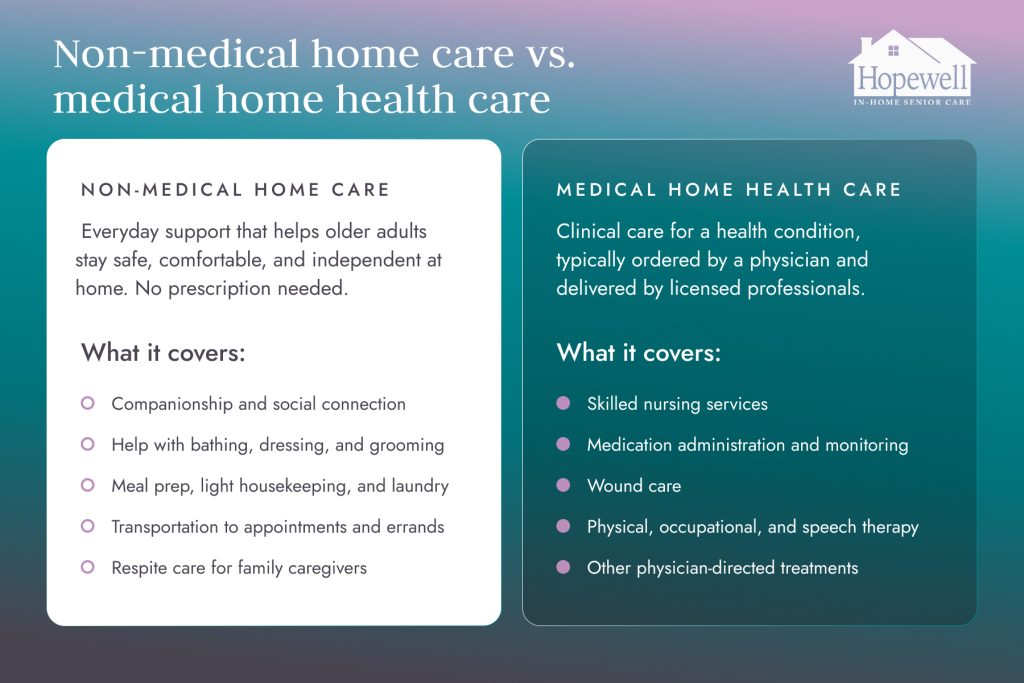
Home care or home health care? Here’s how the two differ and how they can work together
Finding the right Hopewell support starts with understanding your options
If you’ve been wondering whether a loved one could benefit from extra support at home, you’re not alone. Many families begin exploring home care after noticing small changes in a parent’s daily routine, safety, or ability to manage everyday tasks independently.
The good news is that non-medical home care doesn’t have to mean giving up independence. In many cases, it does the opposite, providing the support older adults need to continue living safely, comfortably, and confidently in the place they know best.
Whether your loved one could benefit from companionship, personal care assistance, help around the house, or simply an extra layer of support, the right care plan can make everyday life easier for the entire family.
At Hopewell, we believe every family deserves guidance, compassion, and care that feels personal. If you’re exploring options and have questions about what support might look like for your loved one, we’re here to help you take the next step with confidence.
Speak with a member of our team todayNon-medical home care: FAQs
What is non-medical home care?
Non-medical home care provides support with everyday activities that help older adults remain safe, comfortable, and independent at home. Services may include companionship, personal care, meal preparation, transportation, light housekeeping, and other forms of daily assistance. Unlike home health care, non-medical home care does not include skilled nursing or medical treatment.
What services are included in non-medical in-home care?
Non-medical in-home care services typically include companion care, personal care assistance, meal preparation, transportation, light housekeeping, laundry, errands, and respite care for family caregivers. Services are personalized based on each individual’s needs and preferences.
What is the difference between home care and home health care?
Home care focuses on helping seniors with daily living activities and maintaining independence at home. Home health care provides medical services such as skilled nursing, wound care, medication management, and therapy services prescribed by a physician. Some seniors may benefit from both types of support.
Who can benefit from non-medical senior home care?
Non-medical senior home care can benefit older adults who need extra help with daily tasks, individuals who want to age in place, seniors experiencing loneliness or mobility challenges, and family caregivers who need additional support. Care plans can be tailored to provide as little or as much assistance as needed.
Does Medicare cover non-medical home care?
In most cases, Medicare does not cover ongoing non-medical home care services such as companionship, personal care, meal preparation, or transportation. Families often use private pay, long-term care insurance, VA benefits, or other resources to help cover the cost of care.
How do I know when it’s time to consider in-home care?
It may be time to consider in-home care if a loved one is struggling with household tasks, missing meals, becoming increasingly forgetful, experiencing mobility challenges, or spending more time alone. Many families also seek support when caregiving responsibilities begin to feel overwhelming. Starting care early can often help seniors maintain their independence and quality of life for longer.
Meet your local Hopewell care teamThis article is for educational purposes and is not medical advice. Coverage, services, and care plans vary by individual need and location. Eligibility for VA-covered services depends on VA approval and clinical need.